![[The Talking Machine Forum - For All Antique Phonographs & Recordings]](/styles/we_universal/theme/images/the_talking_machine_forum.png)

Before and After - 1914 Victor VV-IV Berliner
-
tomb
- Victor IV
- Posts: 1424
- Joined: Sat Oct 24, 2015 10:46 pm
- Location: riverside calif
Re: Before and After - 1914 Victor VV-IV Berliner
Looks very nice Those VV-IVs are work horses and extremely well built. Just grease them once in a while and they run fine Tom B
-
Curt A

- Victor Monarch Special
- Posts: 6892
- Joined: Fri Jul 09, 2010 8:32 pm
- Personal Text: Needle Tins are Addictive
- Location: Belmont, North Carolina
Re: Before and After - 1914 Victor VV-IV Berliner
Good tip... It's important to note that the felt was cleaned while still attached to the platter. I did one awhile back and removed the felt before cleaning it... not a good idea. The 10" felt shrunk to about 8" and couldn't be reattached.hearsedriver wrote:I just sprayed it with Spray & wash, let it soak for 20 minutes, and rinsed with hot water in the sink. I did it with the felt still attached to the platter.I set the platter upside down for the night and peeled the felt off the next morning. After cleaning the platter, I sprayed it with 3M Super 77 Multipurpose adhesive. Let that dry for about 5 minutes and then attach the felt. really pretty simple.CharliePhono wrote:Great job, HD. What did you use to clean and reattach the turntable felt?
"The phonograph is not of any commercial value."
Thomas Alva Edison - Comment to his assistant, Samuel Insull.
"No one needs a Victrola XX, a Perfected Graphophone Type G, or whatever you call those noisy things."
My Wife
Thomas Alva Edison - Comment to his assistant, Samuel Insull.
"No one needs a Victrola XX, a Perfected Graphophone Type G, or whatever you call those noisy things."
My Wife
-
hearsedriver
- Victor III
- Posts: 571
- Joined: Wed Jan 25, 2017 10:21 pm
- Location: Ft.Worth, Texas
Re: Before and After - 1914 Victor VV-IV Berliner
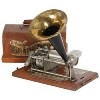
So, here is my temporary fix for the missing winding crank until and original can be found. I had a spare late model VV-IV crank on hand that had some damaged threads so, I didnt mind sacrificing it for this repair. I bought a 1" long, 5/16-24 Threaded coupling, drilled and tapped one end to ⅜-24 using a bottoming tap, and installed a 5/16" nut on the winding arbor followed by the modified coupling to lock it in place. I then cut 1 ⅛" off of the crank and threaded it. It works great. Once I find an original crank, I can simply swap them out plus, I'll have an extra crank for the work bench for testing motors.
- Attachments
-
- 001.JPG (129.07 KiB) Viewed 517 times
-
- 002.JPG (176.95 KiB) Viewed 517 times