Page 2 of 2
Re: Is this the correct graphite?
Posted: Fri Apr 14, 2017 8:29 pm
by EarlH
I re-greased my diamond disk springs 40+ years ago now with graphite and vaseline. My Dad's step father was still alive then and his mother owned the Victor dealership here in town. Bill helped me pull the springs out and do that over and he told me what to get for the job. It's just starting to make a little bit of noise now and again when I play it, so I think that's a pretty good track record for the stuff. And maybe it's not given me much trouble because the machine does get played quite often. Not as much as it did when that was my only phonograph, but it still gets played a lot.
Re: Is this the correct graphite?
Posted: Fri Apr 14, 2017 9:30 pm
by Uncle Vanya
Curt A wrote:I have wondered about this for years:
This is not meant to be critical, but why would you want to re-create the old formula that ends up hardening in the spring barrels? After 100 years we have much better lubrication technology available.... why not use it?
You certainly wouldn't use the same stuff they used to grease wagon axles in the 1800s on your car.... Just wondering what the actual issues or reasons are for wanting to use petroleum jelly for anything other than a rectal thermometer (and even for that there are better options)... Is there some sort of sentimentality or originality concern about the type of grease used on phonographs?
Since petroleum jelly is actually a soft paraffin wax, it is obvious that over time this mixture of wax and graphite will harden, just as we all have discovered when working with noisy springs.
What Is Petroleum Jelly?
Petroleum jelly, commonly known by the most popular brandname Vaseline, is a derivative of oil refining. Originally found coating the bottom of oil rigs in the mid-1800s, it’s a byproduct of the oil industry and therefore an unsustainable resource (read: not eco-friendly). It’s commonly used topically to cure everything from dehydrated, flakey skin to diaper rash. Though generally regarded as safe, the components that are removed from the oil during the refining process of petroleum jelly are carcinogenic in some cases.
Petroleum jelly, petrolatum, white petrolatum, soft paraffin/paraffin wax or multi-hydrocarbon, CAS number 8009-03-8, is a semi-solid mixture of hydrocarbons (with carbon numbers mainly higher than 25), originally promoted as a topical ointment for its healing properties.
The raw material for petroleum jelly was discovered in 1859 in Titusville, Pennsylvania, United States, on some of the country's first oil rigs. Workers disliked the paraffin-like material forming on rigs because it caused them to malfunction, but they used it on cuts and burns because they believed it hastened healing.
Robert Chesebrough, a young chemist whose previous work of distilling fuel from the oil of sperm whales had been rendered obsolete by petroleum, went to Titusville to see what new materials had commercial potential. Chesebrough took the unrefined black "rod wax", as the drillers called it, back to his laboratory to refine it and explore potential uses. Chesebrough discovered that by distilling the lighter, thinner oil products from the rod wax, he could create a light-colored gel. Chesebrough patented the process of making petroleum jelly by U.S. Patent 127,568 in 1872. The process involved vacuum distillation of the crude material followed by filtration of the still residue through bone char.
Chesebrough traveled around New York demonstrating the product to encourage sales by burning his skin with acid or an open flame, then spreading the ointment on his injuries and showing his past injuries healed, he claimed, by his miracle product.
He opened his first factory in 1870 in Brooklyn using the name Vaseline.
This is my third attempt to respond to this thread.
For a few years after University I worked as a product development chemist for a manufacturer of industrial lubricants. I put that awful mixture of Petrolatum and Plumbago through all of the appropriate tests for a semi-solid lubricant and of course found it to be singularly unsuited for this purpose. Petrolatum is a compound which has some volatile elements which evaporate over time, and others which oxydize to form varnish. It is no good at keeping the asperities of mating surfaces from rubbing one another. The graphite was added in a vain attempt to improve the EP (Extreme Pressure) action of the Petrolatum, but even in 1910 better lubricants were available. They were, however, patented, and relatively expensive. Petrolatum & Plumbago was cheap, and worked well enough to get the machines past their ninety day warranty. That's all.
A good heavy gear oil which contains a modern EP additive will perform so very much better in this application. As far as spring lubricant is concerned, ASTM 4172, the "Four Ball Wear Test" is the applicable standard. P&P is simply awful in this application. Even old-time 600W, a heavy oil with a simple additive chemistry far out performs it. With motors, I use either 600W or a modern 140 weight gear oil. Both work well, and with both the springs face less internal friction and put out more power than they do when lubricated with P&P.
Re: Is this the correct graphite?
Posted: Fri Apr 14, 2017 9:43 pm
by hearsedriver
The 600w oil sounds interesting. Do you use it on all of the gears as well as the mainspring? Where do you get it? Ive got a lazy Victor VV-VI that will not start on its own at half wind or below. It could be weak mainsprings but Im thinking it may be more related to the Mobil-1 synthetic gear grease that I sued on the springs. Its pretty sticky stuff.
Re: Is this the correct graphite?
Posted: Sat Apr 15, 2017 12:08 am
by tomb
After cleaning many gears I have gone to a synthetic grease. So far so good. That is my choice but I heard several other people use it too. I do not know what the results will be in 20 or 30 years though. I have worked on several old cars and the grease seemed to be still good inside the axles. Good information on Vaseline Curt..... Tom B
Re: Is this the correct graphite?
Posted: Sat Apr 15, 2017 12:17 am
by gramophone-georg
tomb wrote:After cleaning many gears I have gone to a synthetic grease. So far so good. That is my choice but I heard several other people use it too. I do not know what the results will be in 20 or 30 years though. I have worked on several old cars and the grease seemed to be still good inside the axles. Good information on Vaseline Curt..... Tom B
I use Redline...
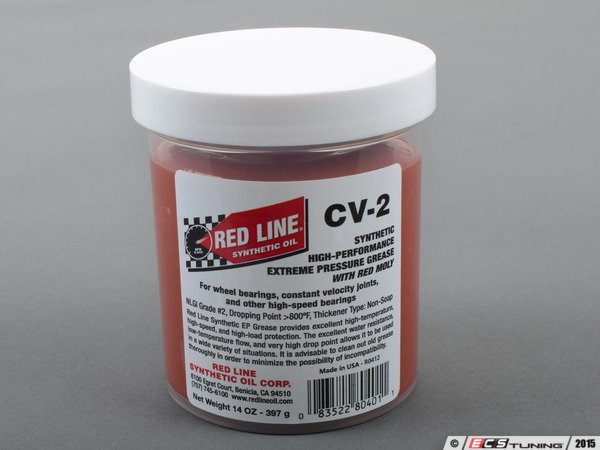
The stuff that is also used for CV joints flows more than just the regular Redline bearing grease in the tube which tends to stick to itself rather than flow past itself.
Re: Is this the correct graphite?
Posted: Sat Apr 15, 2017 11:03 pm
by Uncle Vanya
hearsedriver wrote:The 600w oil sounds interesting. Do you use it on all of the gears as well as the mainspring? Where do you get it? Ive got a lazy Victor VV-VI that will not start on its own at half wind or below. It could be weak mainsprings but Im thinking it may be more related to the Mobil-1 synthetic gear grease that I sued on the springs. Its pretty sticky stuff.
I only use the 600W on springs. On gears I use any NLGI #1 or #2 grease that I can find. These days most are Aluminum Complex, but lithium greases are more than adequate. Lubriplate works well, and contains Molybdenum Disulfide to boot.
600W is available at any antique auto supplier. Lang's in Mass, Snyders in OH, Chaffins on the Left Coast all stock the stuff. It is cheap, $8.25/qt.
Modern production no longer uses Gilsonite as a thickener, and so is no longer black (and no longer turns into a solid block on Zero degree mornings).
http://www.snydersantiqueauto.com/600-w-oil