![[The Talking Machine Forum - For All Antique Phonographs & Recordings]](/styles/we_universal/theme/images/the_talking_machine_forum.png)

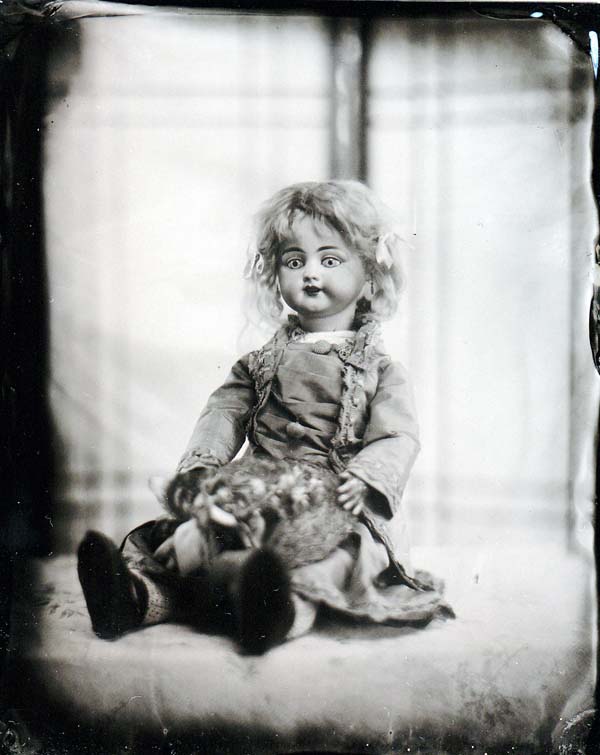
That was one of my very first. I was surprised how well it came out, in terms of lighting and focus, using an 1870s 'Petzval' lens which has a very shallow depth of field. The edges of the image show a lot more flaws that I consider acceptable today. To some extent that's inherent to the process but with practice I make far 'cleaner' images now. There are many people who embrace such flaws and actually strive for as many as possible in the erroneous belief that it makes the images more 'authentic'. They're not. No self-respecting 19th century photographer would put out images like many I see today. (Edge flaws were hidden by metal or paper mats.)
But I digress, this rant isn't about the wet plate process.
I posted that image on my collection website, identified as a tintype I had made in modern times. I have come to regret having posted it because it has since been appropriated without permission by many people, some of who imply that it's an original picture from 1890. It's all over Twitter and Pinterest, it seems. But the horses are long gone so closing the barn door now won't make much difference. I haven't taken it down.
This topic came up again this week when I received an email from a collector who was trying to research the proper dress for an Edison doll. He sent me a scan from a book, showing a doll. I recognized where it came from -- the Rolf's excellent book on phonograph dolls and toys. And I certainly recognized the doll since it was my own. He also sent a small copy of my tintype. His question was as follows:
Oh dear. I can see why he was confused. If the tintype were original, then the one on my doll must have been reproduced based on that.........- The dress in blue (picture number 1) is it a replica from a original talking doll (2?).
I set him straight on that but now I wonder how many other people might be looking to make reproductions of that (non-original) dress based on my (seemingly original) tintype???